The images you'll see as you scroll down to the current text are all part of the story telling in my novel, Realms of Gold:Ritual to Romance.


Bianca Caldwell, pen name, Bianca Fiore, is a writer for an art magazine. In each of her monthly stories she describes an object used in ancient ritual.

Showing posts with label Interview. Show all posts

Art Expert Terry Stanfill Talks About Her Novels “The Blood Remembers” and “Realms of Gold” By Ia Uaro

Ia Uaro, Author of Sydney's Song

Ia Uaro, Author of Sydney's Song

 
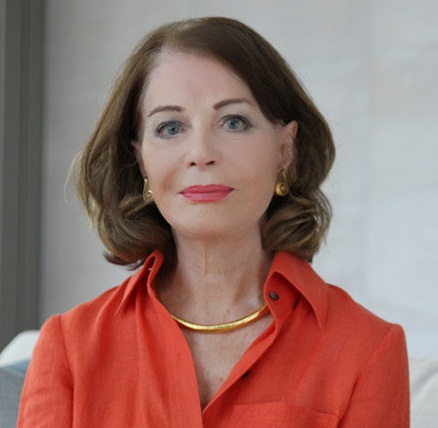
TERRY STANFILL’s first novel The Blood Remembers was published in 2001 and was a finalist in 2002 Independent Publisher Awards and 2002 Dorothy Parker Awards of Excellence. Her new novel Realms of Gold has won the Bronze Medal in Romance of the 2013 eLit Awards. Born Therese Olivieri in West Haven, Connecticut, Terry is a first generation American of Italian descent. She received a degree in English Literature with a minor in Medieval History from the University of Connecticut. Until joining Christie’s as an International Representative, she served as a director of the Norton Simon Museum in Pasadena, CA. She is an overseer emerita of The Huntington Library, Art Collections, and Botanical Gardens and a founding member and Life Trustee of Los Angeles Opera. For her efforts in fund raising for the restoration of San Pietro di Castello, the ancient cathedral of Venice, Stanfill was decorated by the president of Italy with the Ordine al Merito, Cavaliere della Republica Italiana, and more recently as Commendatore. She is vice president of Save Venice, Inc. and was a founder of The California Chapter of Save Venice.

Terry is married to Dennis Stanfill, former CEO of Twentieth Century Fox, and MGM. Their daughter Francesca Stanfill Nye, is a novelist and journalist. Their son, Dennis, is partner and managing director of HBDesign, Singapore.

We are honored to have Terry visiting with us today, and she brings along her fascinating wealth of knowledge and experience.

“For me writing is a mystical experience. I don’t work “on” a book; I work “in” a book… I guess you can call them visions~the visions of my mind’s eye breaking through the layer of consciousness and called the imagination. I believe that the story is already written in the unconscious and it has to be mined out from its depths.”  - Terry Stanfill


Hello Terry, thank you so much for coming in. 

You dedicated Realms of Gold to your daughter, in memoriam. I am a mother myself and I feel you have to be very strong to have written this. Would you like to tell us about her?

Michaela Sara Stanfill, our daughter, was a brilliant girl who suffered from bi-polar disorder.  After graduating with a B.A. from Harvard, she received a Masters Degree in Communications from Boston University.  Michaela, (or “Cada” to rhyme with Michaela), was a professional researcher.  My oldest, rarest articles on the Vix Krater are those she discovered at the Boston Public Library.   After Cada died I went back to the idea of writing a novel about the Krater.  I found that storytelling helped to sublimate my inconsolable grief.

Years before, I’d put together a sketch about the Krater, an immense bronze vessel (archaic Greek) from the 6th century BC.  This was way back in 1994 after I came upon this virtually unknown object in a backwater museum in Châtillon-sur-Seine, Burgundy.  Soon after, I wrote a very simple storyline and showed it to my editor, the late Alan Williams, retired Editor in Chief at Viking press. He liked my ideas but advised me to put them aside and concentrate on finishing my first novel, The Blood Remembers, which, like Realms of Gold, is also set in Italy and France.

When I returned to the idea of writing about the Krater.  I abandoned the original sketch and found myself writing a completely different book—now Realms of Gold begins with a wedding in Venice and the opening chapters are from the point of view of Giovanni.  And Bianca has developed into a much more interesting character.

Giovanni Di Serlo, by the way, is a character, an archaeologist, in The Blood Remembers.  When he talks about the woman who went back to her husband in California, he’s talking about Rose Kirkland, the protagonist of the novel.   Why not use him as the archaeologist in The Krater (working title), I thought. Many of my readers liked him and so I decided to “keep Giovanni going.”

A huge vessel used for the mixing of wine in ceremonial rituals was unearthed in a tomb from 600 BC, along with the remains of a woman of great importance.

 Bianca has mystical visions of people from the past. Personally, I’ve had telepathic “contacts” with living people and “see” them—mostly when they’re in trouble—but they are not strangers or people from the past. Do you know a person with visions such as a “medium” or a “seer”, or do you have this ability? Please share your experience and opinion with us.

I too don’t know anyone personally who has a gift of prophecy—although I have heard of people in Italy who have this oracular power, handed down for generations to certain women supposedly from the seeresses and sybils of antiquity.   As for myself, I do have some pretty good hunches every now and then.

For me writing is a mystical experience. I don’t work “on” a book; I work “in” a book.  It all begins with my dreams. I have hundreds of pages in my dream-journal computer files and several pre-computer notebooks with dreams written by hand.  When I write, some of the images loom large, and I use them in my storytelling.  I, as a Jungian, believe that much of what we know and remember comes from the unconscious—and the deeper one goes into the unconscious by meditation or dreams, the more visual the storytelling. The back-story images in Realms of Gold are parts of actual dreams.   Before I began my first novel I wrote poetry, and relied on those visual images. Most of Bianca’s ritual stories for the magazine were written this way.  I guess you could call them visions—yes—the visions of my mind’s eye breaking through the layer of consciousness and called the imagination.  I also believe that the story is already written in the unconscious and it has to be mined out from its depths.

Synchronicity, important in the narrative in Realms of Gold is also activated by digging deeper into the unconscious.  I have had some startling occurrences that could never be merely coincidences.

The Blood Remembers


“The Blood Remembers” was a finalist in 2002 Independent Publisher Awards and Dorothy Parker Awards of Excellence.

A jewelry designer inadvertently unravels a mystery surrounding the medieval emperor, Frederick II.

Coming from a strongly matriarchal people myself, I like the independent women in your story. Who are the special women in history you particularly admire, and why?

There are two women who come to mind immediately—not so much women that I admire, but women who made a mark on the history of England, France and Italy, women who were in my area of research for my first novel.

The first, Constance de Hauteville, the daughter of King Roger of Sicily, and the mother of the Emperor Frederick_II.  Frederick was born in December 26, 1194, died in 1250. 

Constance became the wife of Henry VI, Holy Roman Emperor.  When Constance was forty years old she gave birth to a son on her way back from Henry’s German kingdom to Palermo, where her ancestors the Normans had founded a great kingdom.  Her son, who would one day become Frederick II (grandson of Frederick Barbarossa), was born in the public square of Jesi, near Ancona, in the Marche area of Italy.  An elaborate tent was set up and any matron in the town could witness the birth of her child. Since Constance was over 40, she wanted to put to rest any stories that might arise if the birth had not been publicly witnessed. She also nursed her son to prove that she was indeed his mother. The image of this town square, with its great tent, eventually propelled the storytelling in The Blood Remembers. Years ago, long before I picked up the pen, it had become a vision imbedded in my mind’s eye.

The second historical character is Eleanor of Aquitaine; mother of King Richard the Lion Heart, and King John (of Magna Carta notoriety) was Queen to both Louis VII of France and to the Plantagenet Henry II of England.  She lived a long life, and had enormous influence on the politics of Aquitaine, England and France.  Eleanor was a patron of the arts.  She brought with her the refinements of her beloved Aquitaine, poetry, troubadours, courtly love.  Her daughter Marie, by King Louis of France was the patron of Chrétien de Troyes, and it is conceivable that Queen Eleanor was also Chretien’s patron, as well.  Chrétien and his romance Le Conte du Graal (The Story of the Grail) is also an important part of the story telling in Realms of Gold...

One of the contemporary women I admire is the late Dorothy Buffum Chandler, who raised enough funds to build the three theaters of our Music Center, and who wisely engaged the very young Zubin Mehta to become the first conductor of the Los Angeles Philharmonic in its new setting, the Dorothy Chandler Pavilion.  Buff Chandler was a very strong woman and it was hard to say no to her when she was so convincing about her mission. She raised millions of dollars for this great city which was bereft of a performing arts cultural center.

Another woman for whom I have a lot of admiration is the controversial writer, Camille Paglia, who is very strong in her opinions.  I was impressed by her book, Sexual Personae: Art and Decadence from Nefertiti to Emily Dickinson (1990), her best-selling book of literary criticism.  I admire Paglia for defending the canon of the western literature when so many colleges and universities want to abandon the classics and great writers throughout history.

Bianca Caldwell is quite a personality. How real are your characters?

My daughter was never far from my mind as I wrote.   Even though Michaela is not Bianca, she had some of her characteristics. She too had a strong personality, definite opinions, and wasn’t the least bit shy about giving them. I know that she would have liked Bianca and she would have smiled at some of her descriptions, attitudes, little eccentricities—just as I’m smiling now as I write this for you.  My characters are sometimes, but not always, composites. My mind is always at work combining the fruits of my imagination with people I know, or have known in reality. 


“I’d put together a sketch about the Krater, an immense bronze vessel (archaic Greek) from the 6th century BC. This was way back in 1994 after I came upon this virtually unknown object in a backwater museum in Châtillon-sur-Seine, Burgundy.” - Terry Stanfill

Would you share the joy, the challenges, or your special experiences in regards to developing Realms of Gold and what has happened afterwards?

After The Blood Remembers was published I felt an enormous vacuum in my life, in my daily routine. After years of studying the Normans in South Italy I was suddenly without the dedication and the pleasure I derived from historical research. Because the Vix Krater had made such an impression on me on that day in 1994, I thought I might return to the idea of writing a novel about it. Before long I was reading everything I could find about the archaic period in Magna Graecia, the art, philosophy, about the early Hallstatt Celts, the many Celtic tribes in France.   When finally I sat down to write in 2006, the historical detail was in my head, and the narrative flowed—especially on Bianca’s ritual pages. This was exhilarating!

The joys have come from the excellent reviews of Realms of Gold, and by the recent ward of a bronze medal (third place) in the romance category from the E-Lit Awards.   The Blood Remembers, in hard cover, was first runner up in the general fiction category—Independent Publishers Awards back in 2001, it was also short-listed for the Dorothy Parker Award.

At Vix in Burgundy in 1953, Archaeologist René Joffroy unearthed a huge krater, a vessel used for the mixing of wine in ceremonial rituals, in a tomb from 600 BC, along with the remains of a woman of great importance. With the height of 1.63 m, the Vix Krater is the largest known metal vessel from antiquity.

How did your love for history develop?

I can’t remember when I didn’t love history—especially ancient history—Greek and Roman in particular. I couldn’t have been more than six or seven years old when my Auntie Luisa returned from Italy with postcards of Pompeii and Herculaneum—how fascinated and terrified I was to hear the story of the eruption of Mount Vesuvius.  I read The Last Days of Pompeii by Edward Bulwer-Lytton when I was in my teens—and one of my favorite novels of the past decade is Pompeii by Robert Harris.  When I was a little older I also became interested in mythology, a subject which interests me still.  I also enjoyed The King Must Die by Mary Renault, a retelling of the myth of Theseus and the Minotaur, as if it were reality—the works of Robert Graves, among them, The White Goddess, have been helpful.  And of course, Jessie L. Weston’s From Ritual to Romance which I’d attempted to read when studying T.S. Eliot’s The Wasteland as a freshman in college.   I was far too young to understand why Eliot paid homage to her ideas.

Later on, at university, I studied Medieval history.  Years later, the history of the Norman conquest of in South Italy was the subject of my research at the Huntington Library where I was a Reader.

Sometimes I scold myself for not being more knowledgeable about American history.  I feel somewhat redeemed after reading David McCullough’s John Adams, then 1776, and more recently, The Greater Journey, his book about great Americans, writers, artists, and scientists in Paris in the 19th century. 


“I can’t remember when I didn’t love history—especially ancient history—Greek and Roman in particular. I couldn’t have been more than six or seven years old when my Auntie Luisa returned from Italy with postcards of Pompeii and Herculaneum—how fascinated and terrified I was to hear the story of the eruption of Mount Vesuvius.”

On your work and writing. Who would you say have been the most influential authors or historians in your life? What is it that really strikes you about their work?

Ernst Kantorowicz, who, before he became a professor at Princeton, published (in 1927) the first complete monograph in English on Frederick II, King of Sicily and Holy Roman Emperor. He clears Frederick of all contradictions and portrays him as a genius, a precursor of the Renaissance, who was advanced in law, science, art, architecture, philosophy. He spoke many languages including Arabic and Hebrew.

I bought this biography in Blackwell’s in Oxford, where Dennis (my husband) was a student.  Years later I could find no other book on Frederick II in the English language.  And it was this book, and my fascination with Frederick II, that became a seminal influence, and my novel, The Blood Remembers was the ultimate result.  Kantorowicz portrays Frederick as “the genius and master of all times and eras before and after him.”

Certainly John Julius Norwich was a great influence with his two books on the Normans in South Italy and Sicily—The Greater Conquest and The Kingdom in the Sun, his volumes on Venice and Byzantium.  Although Norwich claims not to be an academic, he writes with historical accuracy and clarity, in his own inimitable voice, making his books a joy for the layman to read.

Chrétien de Troyes was an important influence.  Chrétien, as I mentioned earlier, was a court poet to Marie of Champagne, and Eleanor of Aquitaine.  It was Chrétien who first mentioned Camelot, describing it as a place on a hill, by a river, surrounded by forests, with plains beyond.  I make good use of his description in Realms of Gold!  Chrétien was also the first to write about King Arthur and his court. 

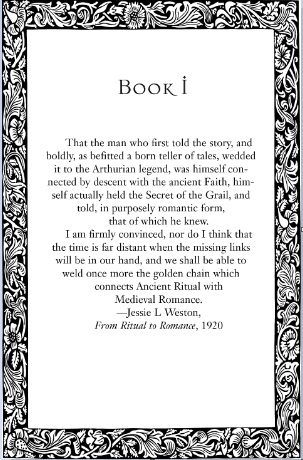
Jesse L Weston’s provocative words from her landmark book From Ritual to Romance, referred to Chrétien de Troyes and especially his romance, The Story of the Grail.

“It is most probable that the man who first told the story, and boldly, as befitted a born teller of tales, wedded it to the Arthurian legend, was himself connected by descent with the Ancient Faith, actually held the Secret of the Grail, and told in purposely romantic form, that of which he knew.”

"The subtitle of Realms of Gold: Ritual to Romance is my tribute to Jesse Weston. "
Thanks, Ia for your provocative questions.  Thanks for reading through this.  I hope I haven’t gone on too long!

It’s a great honour to have you with us Terry. Thank you so much for your precious time!

And readers, I hope you have enjoyed meeting Terry Stanfill. Following is my review of her intriguing book, “Realms of Gold.”


REVIEW

There are several layers of stories inside this story and intelligent readers with interest in historical mysteries and the intricacies of ancient arts would be intrigued by how the plot unfolds.

At Vix in Burgundy in 1953, Archaeologist René Joffroy unearthed a huge krater, a vessel used for the mixing of wine in ceremonial rituals, in a tomb from 600 BC, along with the remains of a woman of great importance.

In July 2007 archaeologist Giovanni Di Serlo attends a cousin’s wedding in Venice and meets Bianca Caldwell, an American art writer who depends on her visions for guidance as she writes about ancient objects and their use in ritual.

Bianca is obsessed with the mystery of her great grandmother Nina Evans, especially being in Venice, because this never-married Nina had returned from a 1902 Venice holiday pregnant.

Giovanni doesn’t think much of Bianca’s looks and her abysmal fashion sense, however he is kind to her and tells her about his latest archaeological work.

On the plane home to New York, Bianca receives inspiration that connects the Vix Krater with medieval poet Chrétien Troyes and King Arthur’s Grail. On her arrival home, her flat has been broken into and vandalized by the Mafia group Sacred Crown United, but nothing is lost.

 Bianca continues to receive visions about strongly matriarchal peoples, and in her mind eye she sees the life events of the Lady of Vix, Zatoria, from her childhood with her storyteller mother and her travels with her spiritual-teacher father, Zalmoxis. Bianca also sees visions of Nina, and what had happened to her in Italy in 1902.

Giovanni invites Bianca to visit his dig of the lost city Sybaris, and Bianca connects her visions of Zatoria with his scientific findings of the origin of the Vix Krater. To understand more about their findings, these two set off to follow Zatoria’s journey from Sybaris to Vix in France.

The author’s fantastic imagination combined with her thorough knowledge of the artifacts lead us to the ancient world as we follow Zatoria’s journey from Olbia to Sybaris, to Vix. Terry Stanfill shows us these places and how their peoples had lived, what they had used and what mattered to them. And at the same time the real-life plot gets thicker as tomb-looters and underground art smugglers emerge, and romance blossoms.

This book isn’t for everybody but may hook avid mystery readers, who will lose themselves in learning intriguing new knowledge. A wonderful experience.

Gold – the Hot Commodity of 2013 and 500 B.C.

From: http://idahoseniorindependent.com
 

With Interest in the Precious Metal High, Art Expert Examines Its Past

If ever gold was precious, it’s now.

“Gold has remained at or near record high prices, even while the value of other commodities falls,” notes art expert Terry Stanfill, author of Realms of Gold: Ritual to Romance (realmsofgoldthenovel.blogspot.com), a book that blends factual ancient art and history with modern, fictional romance.

“This past summer, we were all about the gold – our athletes’ gold medals, which, by the way, had the highest value of any Olympic gold medals in history at $708.”

More than two-thirds of the world’s gold demand is for jewelry, she says, of which the United States is the third-largest consumer, behind India and China.

But Stanfill, who studies ancient gold artifacts and weaves them into her newest novel, says we are hardly the first to become enamored of the rare yellow metal.

“The first discoverers of gold were prehistoric, well before the civilizations of the Pharaohs of Egypt and the Sumerians,” she says. But gold soon attracted the admiration of the rich and royal, and since then, kings and emperors, explorers, pirates, and thieves.

“Gold figures prominently in the art and currency of the ancient European civilizations I research. It’s one of the most enduring metals, by every definition of the word,” Stanfill says. “Because of that, the gold jewelry, shoes, vessels and other artifacts unearthed by archaeologistscontinue to tell their stories centuries later.”

Stanfill shares some other precious golden nuggets:

• Jason and the Golden Fleece, myth or reality? Roman historian, Strabo(1st century B.C.) wrote about villages by the Kuban River in the Ukraine, where gold collectors used sheepskins to trap the fine gold particles in the rivers and streams flowing from the Caucasus Mountains. The skins could then be dried and beaten to shake out the gold dust. This practice continued well into the 20th century. It’s very possible Jason and the Argonauts sailed to Colchis, a kingdom on the Black Sea, searching for gold. They most likely heard about this wondrous process from other seafarers and traders.

• Why so popular for so long? One of the reasons gold has been valued since prehistoric times is, frankly, its beauty. The gleaming yellow metal has a color and brilliance unmatched in the mineral world. Another reason is that the world has precious little of it. In all of history, just less than 364 million pounds have been mined. Only 5.5 million pounds a year are mined now.

• The stuff of classic fashion. Evidence of ancient art in contemporary architecture, sculpture and other designs is all around us. But nowhere is it as surprising to see as in modern jewelry. Choker-style necklaces made of rigid metal, so populartoday, date back to the 8th century B.C. They were a multi-cultural phenomenon, worn in some societies by men and in others by women. For the Celts, they were a symbol of strength and power, and ancient Celts were often identified by the torques they wore not only around their necks but around their waists and wrists (bracelets!)

Even as modern society hoards gold as a hedge against the volatile world economy and watches as the price per ounce rises and dips, Stanfill says the true value, for her, is in its history.

“Some of mankind’s most beautiful artwork – his very best efforts – were created from gold, and they endure today,” she says. “Without gold, we might not know the status of people found in ancient tombs, and we would not have the vast collection of centuries old artworks that we do today.

“The value of gold that never changes is in how it allows the ancients to communicate with us.”

Larry Thompson's Thriller Thursday Podcast


Interview with author Terry Stanfill


Play

Author of Realms of Gold: Ritual to Romance


Terry Stanfill’s novel centers around the Krater of Vix, a massive 450 gallon bronze vessel discovered in the Burgundy region of France in 1952.  Nearby, a 2500-year-old tomb of what is thought to be a Celtic princess is also discovered and the mystery of these two discoveries intertwines in a global adventure for the protagonist, Bianca Fiore.  The tale combines scintillating mystery with budding romance as the mystery of the princess and the urn are unraveled.

Terry Stanfill
 

Ms. Stanfill is an expert on Italy, art and antiquities, and all of these disciplines, plus a health dose of intrigue and adventure, make Realms of Gold a fascinating, satisfying read. Join Larry and co-host Dave Dufour as they interview this most interesting guest.

Terry Stanfill’s Website

Studies of Ancient Gold Artifacts Woven into New Novel By Terry Stanfill


If ever gold was precious, it’s now. “Gold has remained at or near record high prices , even while the value of other commodities falls,” notes art expert Terry Stanfill, author of Realms of Gold: Ritual to Romance www.realmsofgoldthenovel.blogspot.com , a book that blends factual ancient art and history with modern, fictional romance.

“This past summer, we were all about the gold – our athletes’ gold medals, which, by the way, had the highest value of any Olympic gold medals in history at $708.”

More than two-thirds of the world’s gold demand is for jewelry, she says, of which the United States is the third-largest consumer, behind India and China.

But Stanfill, who studies ancient gold artifacts and weaves them into her newest novel, says we are hardly the first to become enamored of the rare yellow metal.   


RealmsofGoldNovel2 Studies of ancient gold artifacts weaved into new novel.

“The first discoverers of gold were prehistoric, well before the civilizations of the Pharaohs of Egypt and the Sumerians,” she says.

But gold soon attracted the admiration of the rich and royal, and since then, kings and emperors, explorers, pirates, and thieves.

“Gold figures prominently in the art and currency of the ancient European civilizations I research. It’s one of the most enduring metals, by every definition of the word,” Stanfill says. “Because of that, the gold jewelry, shoes, vessels and other artifacts unearthed by archaeologists continue to tell their stories centuries later.”

Stanfill shares some other precious golden nuggets:

• Jason and the Golden Fleece, myth or reality?

Roman historian, Strabo(1st century B.C.) wrote about villages by the Kuban River in the Ukraine, where gold collectors used sheepskins to trap the fine gold particles in the rivers and streams flowing from the Caucasus Mountains. The skins could then be dried and beaten to shake out the gold dust. This practice continued well into the 20th century. It’s very possible Jason and the Argonauts sailed to Colchis, a kingdom on the Black Sea, searching for gold. They most likely heard about this wondrous process from other seafarers and traders.

• Why so popular for so long?

One of the reasons gold has been valued since prehistoric times is, frankly, its beauty. The gleaming yellow metal has a color and brilliance unmatched in the mineral world. Another reason is that the world has precious little of it. In all of history, just less than 364 million pounds have been mined. Only 5.5 million pounds a year are mined now.

• The stuff of classic fashion.

Evidence of ancient art in contemporary architecture, sculpture and other designs is all around us. But nowhere is it as surprising to see as in modern jewelry. Choker-style necklaces made of rigid metal, so popular today, date back to the 8th century B.C. They were a multi-cultural phenomenon, worn in some societies by men and in others by women. For the Celts, they were a symbol of strength and power, and ancient Celts were often identified by the torques they wore not only around their necks but around their waists and wrists (bracelets!)TerryStanfillAuthor Studies of ancient gold artifacts weaved into new novel.


TerryStanfillAuthor Studies of ancient gold artifacts weaved into new novel.
Author Terry Stanfill
Even as modern society hoards gold as a hedge against the volatile world economy and watches as the price per ounce rises and dips, Stanfill says the true value, for her, is in its history.

“Some of mankind’s most beautiful artwork – his very best efforts – were created from gold, and they endure today,” she says. “Without gold, we might not know the status of people found in ancient tombs, and we would not have the vast collection of centuries old artworks that we do today.

“The value of gold that never changes is in how it allows the ancients to communicate with us.”

Terry Stanfill holds a degree in English literature with a minor in medieval history. She is an Overseer of the Huntington Library in San Marino, Calif. An enthusiastic preservationist, she was decorated by the president of Italy with the Ordine al Merito, Cavaliere della Repubblica Italiana, and more recently as Commendatore, for her fundraising efforts for the restoration of San Pietro di Castello, the ancient cathedral of Venice. She is a former international representative for Christie’s auction house and former director of Norton Simon Museum in Pasadena, Calif. 


Realms of Gold: Ritual to Romance is her third novel and it has received glowing praise; Kirkus Reviews described it as, “An erudite thriller that recalls Dan Brown’s Robert Langdon series—only smarter.” Stanfill is married to Dennis Stanfill, former CEO of 20th Century Fox and MGM Studios.

Author Interview - Terry Stanfill - Realms of Gold: Ritual to Romance

My Addiction Books


Terry Stanfill received her degree in English Literature with a minor in Medieval History from the University of Connecticut. She raised funds for the restoration of San Pietro di Castello, the ancient cathedral in Venice and was decorated by the president of Italy with the Ordine Al Merito. We are honored to have Terry standoff some time for a written interview on her novel Realms of Gold.

The novel Realms of Gold: Ritual to Romance is a present-day romance that combines 2007 with historical occurrences that took place in the 1953’s. In your latest release you make mention of the fact Camelot’s location is discovered by your characters in France and not England. I’m sure this statement caused many ripples to rush your way. Tell our readers a bit more about the plot and some of your favorite characters. What method did you use in writing your novel?

Really, there are two parts to this question: Part 1: So far so good as far as controversy with Arthurian friends, but I'm sure that there'll be some--perhaps many--who will disagree with me about Camelot and its location in France. Arthur was a legendary British king, and anglophile that I am, I’d have never believed otherwise.  However, the historical Arthur Riothamus, now believed to have been he King Arthur of legend by top academic scholars, was indeed a Briton, a valiant soldier who fought for the Romans fending off Goths and Visigoths in what is now north eastern France.

Arthur Riothamus (chieftain, King) was wounded in battle in Bourges, and carried by his men to Avallon which was not far from where he fell.  It was in Avallon that he died.  This is fact and not fiction, so now we have a real Arthur with a connection to a real Avallon, and we can begin to look for other clues about his life, his places, how and where his legends might have begun--and the man whose vision gave us the idea of Camelot.  .

Part 2: (PLOT, CHARACTERS) The prologue begins in the village of Vix, Burgundy, France in 1953, with the actual discovery of a massive bronze krater, in the grave of a Celtic woman.  The Krater was forged in the South of Italy circa 510 B.C.  How, I wondered, did this masterpiece of bronze smithing find its way from gold-rich and legendary Sybaris in southern Italy, to Latisco, a Celtic citadel, now known as Mont Lassois? Bianca Caldwell a writer of vignettes for an            art magazine, pen name Fiore, and Giovanni Di Serlo, an Italian archaeologist, are   determined to know how and why this immense vessel made its way from Sybaris, a wealthy ancient city in the south of Italy, to the village of Vix in Burgundy. After a series of frightening events, Bianca accepts Giovanni’s invitation and leaves New York for Italy to visit the site of his dig, and before long they begin their quest, taking the route of the Krater from Sybaris to the village of Vix. There are three other subplots in the novel, all woven together at the end. 

As a writer myself I have gone through various levels of growth. I continually end up wondering whether things might have been a lot easier had I just had more information when I started.  For example there is the ever so popular Snow Flake method created by Randy Ingermanson. Then we have our regular daily news from Dave Farland. How did you end up going about getting your mind to paper?

I've not used any particular method.  I don't have the patience with following software directions. Once, before software for writing had taken off--maybe in the early 90s, I tried a system--but I had such a hard time figuring it out, I abandoned it and continued to work the way I always have--early in the morning, with a double espresso recording a dream or a fragment of a dream This helps to stir up the unconscious--that's where the imagination begins its work. Also free association helps, and, as a Jungian, I have great faith in the depths of the unconscious.  Often while daydreaming ideas float up to consciousness and I try to snatch them, write them down before they become submerged again--during daydreaming, characters begin to have ideas, they speak, their problems get solved or they arise, the plot begins to thicken and subplots may emerge--sometimes as a surprise. Sometimes when I write this way and read the prose later, I myself am surprised. Or maybe a word or a song comes into mind and stays there. Write down the title and check out the words.  Sometimes the most amazing insights arise from the lyrics and sometimes I can work them into the narrative.  As for getting my mind on paper and constructing stories, for me it depends on beginning with a strong and simple narrative, a clear and purposeful voice, maybe in the first person for a new writer.  And spare the description unless it has true bearing on the narrative! I remember the day my first editor gave me a serious talk about this--knowing that I loved artistic, descriptive, detail. 

And reading, reading your favorite writers is so important.  I've always read a lot. I entered our library reading contests--the first when I was nine years old. I read even more now that I have a Kindle. When people tell me, "Oh--I must have a book in my hand," they're usually people who don't read a lot. By contrast, my    serious bibliophile friends are hardly ever without a Kindle. I never leave the house without mine--just in case I have to wait in an office, or in my car.

What tips could you give aspiring authors into achieving the level of being published? Randy for instance has a questionnaire which fellow authors can complete. The questionnaire eventually tells you where you are on your road to being published. Points he lists as parts of his questionnaire are–do you have critique partners? Do you ever attend writing conferences? As a published author yourself what do you feel is relevant on the road to get published?

Years ago I did attend two writers' conferences, but in the long run, for me it was trial and error, draft by draft, revision by revision to arrive at a polished product.  This builds confidence, sometimes conferences do not--at least they did not for me. I'm very grateful to a few friends who are happy to read whatever I've written, and a good friend who is a professor of English Literature--Shakespeare and William Blake--who is always happy to share her knowledge and love of the English language with me--and to critique my work.  Dr. Kenneth Atchity, long time friend, brilliant scholar, novelist, and now my publisher, is also my mentor, always ready to listen and advise. Dr. Eric Haskell, of French and Humanities, Scripps College, Claremont, California, who first listened to my ideas about Realms of Gold--and whose words, "Terry, I think you might have something here."--were all I needed for me to begin my personal quest--to tell the story of The Krater of Vix.  

As a published author who is your target audience?
Young adults to senior citizens. 

Are you currently working on anything new? What could fans look out for?  
I’m working on Tale of the Fortuny Gown--set in 1984, the year of the       Olympiad in Los Angeles. Very different from my other books.

Realms of Gold: Ritual to Romance was made available on Amazon on  20 March 2012. How has it been going with reviews and sales?  

We’ve just started to get the word out about the book, and doing  interviews (like this one) so it’s too early to say. But responses from readers, as on amazon “reviews,” have been very positive and encouraging—and we have over 6,000 “likes” on Facebook.

What was your inspiration behind writing the novel?

My first inspiration came from reading a book on the discovery of the site of vanished Sybaris in Southern Italy. Sybaris was famous for its love of luxury. It was destroyed by Kroton, a neighboring city state in 510 B.C.  In the mid-sixties the exact site of Sybaris was discovered by a team from the University of Pennsylvania. After reading the book several times, I put it away until I came upon the monumental Krater of Vix, circa 510. And when I learned that the great bronze Krater of Vix was made in Sybaris, I knew it was time to begin to tell its story from my imagination.

Where can people / fans follow your work and contact you for any      enquiries?

The best way is by email,  namearose1@aol.com and visit     realmsofgoldthenovel.blogspot.com or Facebook’s Realms of Gold page where I’ve been responding personally to comments from my growing “Likes”—over 6,000 already, from all over the world.

Are there any other novels we can look out for? Where can readers find them?          

The Blood Remembers, published first in 2001.  Now on Kindle and also available in hard cover.  A Tale of the Fortuny Gown, soon to be published as Story Merchant E[book on Kindle

Who is Terry the author?

I'm of Italian descent, majored in English Literature/Medieval History. I and Dennis, my husband, a Rhodes scholar, lived in Oxford, England for three years, then in Washington, D.C, New York City, finally in the Pasadena, California area where we are to this day. I'm a long time Director of  Save Venice, Inc. raising funds to restore and preserve the art and architecture of that endangered city, a founding Life Trustee of  Los Angeles Opera , and an Overseer of the Huntington Library and 'Art Collections in San Marino, California where I       was a Reader. My subject of interest--the Normans in South Italy and Sicily in the 11th and 12th centuries, provided background material for my first novel, The Blood Remembers.

Tell our readers a bit more about yourself what made you decided to write. What do you do besides writing?

I have always written something--lots of long letters (by hand), poetry, a few short stories, but I was always daunted at the thought of writing a novel, creating a world.  Sometimes, at bedtime, I'd write the first page of a novel in my head, and that page would change many times, until I finally wrote the words. Tomorrow I must leave my home forever.  And my story, The Blood Remembers, went on from there. Those were the magic words.  
                
As for what else I do, I try to walk at least four times a week, work out at the gym three times.  I enjoy working in my garden, right now my tomatoes are red on the vine, we enjoyed our first bunch of luscious green grapes last night, and zucchini bread is ready to go into the oven. 

 http://my-addictionbooks.blogspot.com